Tuesday, March 14, 2006


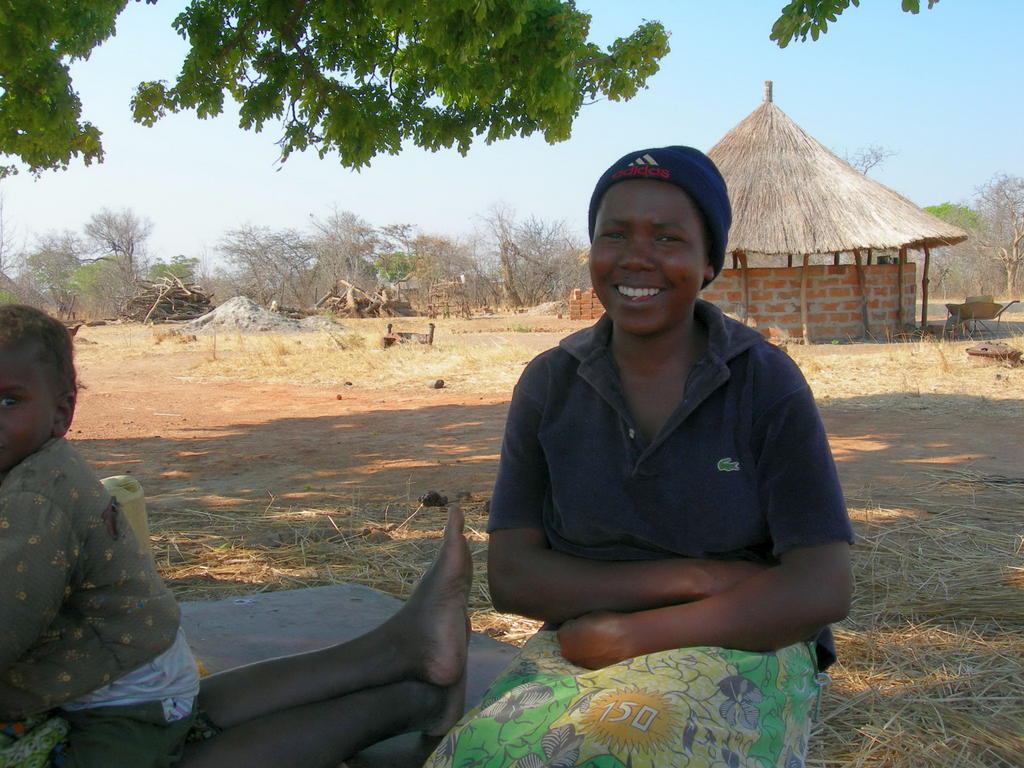
This is marjorie (majo). She has moved to live with here mother in Kalomo (south of where I live) so I will probably rarely see her any more. I made her smile which was an accomplishment. She also was staying at the compound where I stay.


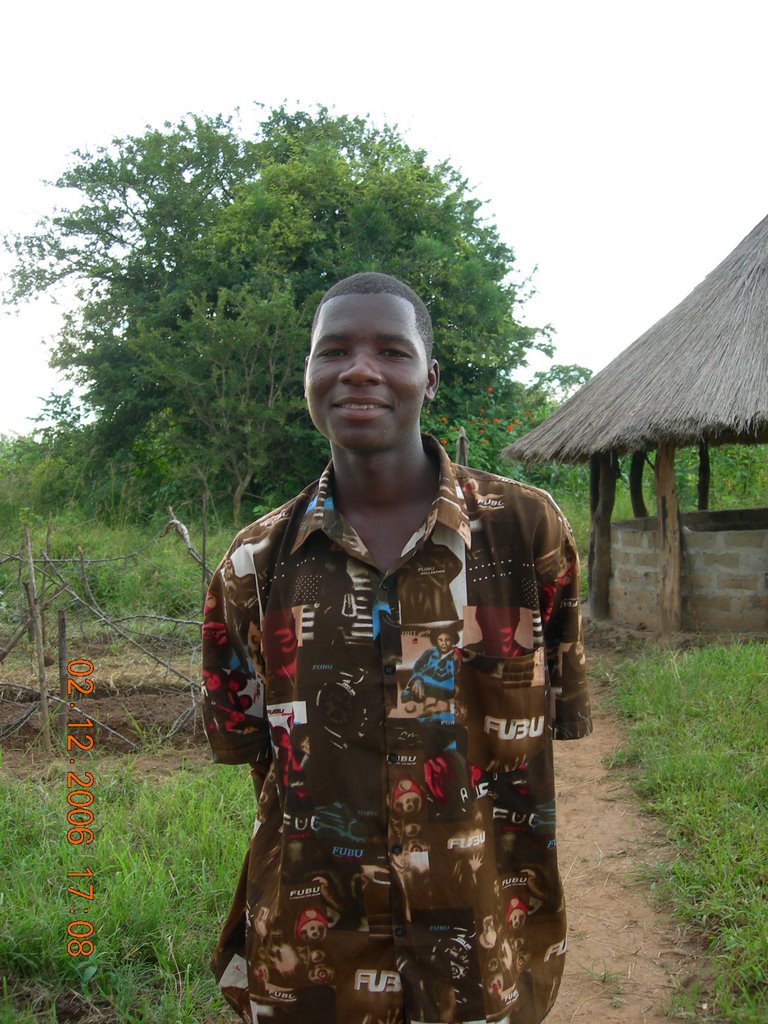
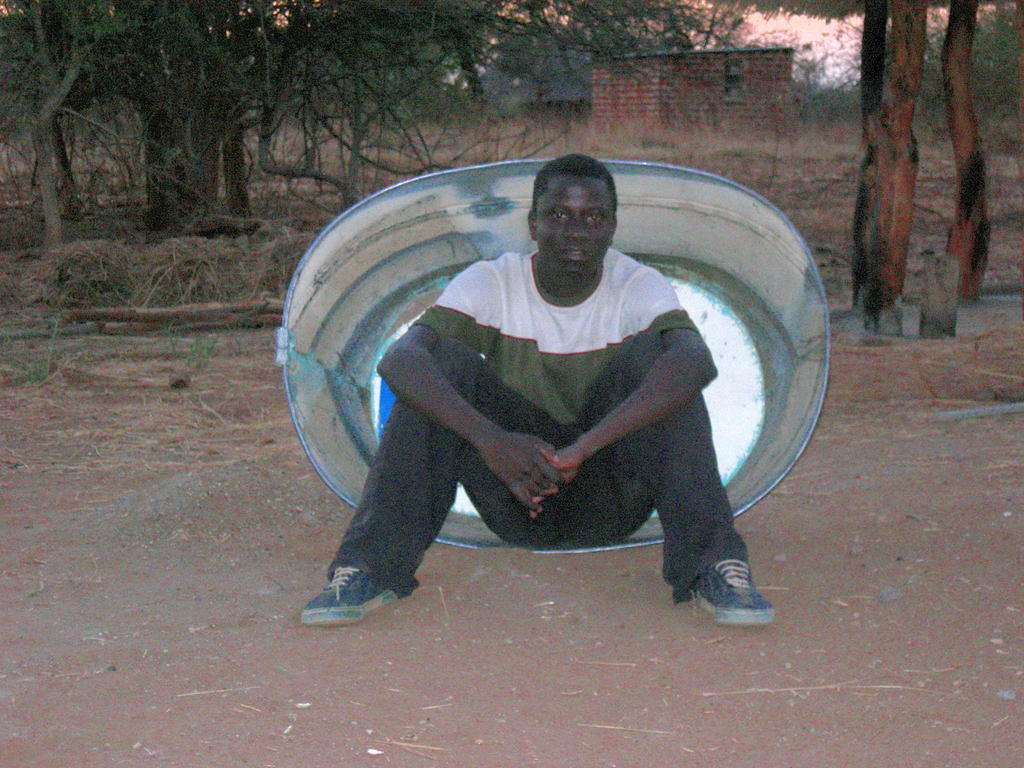
This is Hamagaye (or raoul). i took this photo as a public health example.

He has been spraying cotton with extremely toxic chemicals with a sprayer that leaks onto your back (I have used it) and without shoes or protective clothing. This is an issue, but other things such as malaria, TB, and HIV are more likely to be significant cause of morbidity to him.


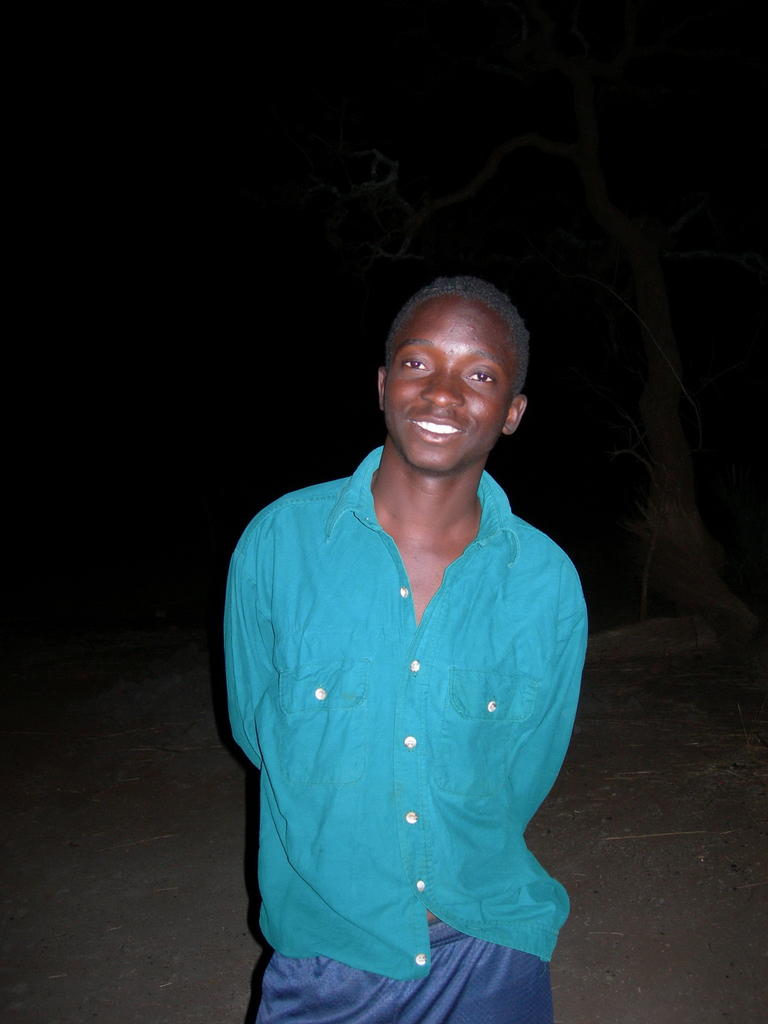
This is Mr. Wellington or Weka. He is staying at my compound but is moving to Luapula province very soon to stay with his uncle. The headmistress where I stay is his aunt. He lost both parents to HIV and is being helped by extended family. Judging from the roughly 20% of children at schools here being either single or double orphans, I'd say his story is not a rarity.


This is my yard in late January. Grass is still growing and growing and growing...
I walked to my maize field yesterday. Slight rain, sun peeking out from behind scattered clouds. The maize is past my head and thick cobs of maize are sprouting everywhere. A wind and rain day has knocked over some of my maize as the ground was loosened by the heavy rains.

I plucked two fat cobs and took them home to fire-roast and eat while hot. I was eating them and sitting in my cooking shelter thinking how nice village life is. The simplicity is something beautiful that I am trying to embrace with open arms. I was thinking about how tied to natural cycles I am when in the village, something that becomes lost when I am in the city. I don’t notice the rain, the wind, or the sun quite as I do when my doorstep is near the bush.

Recently, I have been working in the outskirts of the capital, Lusaka, assisting a volunteer in developing a survey to measure behaviors and beliefs related to HIV/AIDS in his ~7000 person catchment area. He is a crisis corps volunteer working with an NGO there. Crisis corps volunteers have completed a 2 year Peace Corps stint and are extending service in a number of “crisis” areas, such as HIV. My class work at Rollins as part of my MPH gives me background in this area; hence I have been requested to come to the capital as often as necessary to make an instrument that may be adapted or used by other volunteers or NGO’s here.

It is a bit tiring coming here out of the village and adjusting to urban life for a few days of work at a time, but I am glad my MPH is proving useful as there have already been things I was able to clear up regarding the survey. As a friend of mine says, “we don’t have resources to squander here”. This makes me want to squeeze as much out of this survey and make sure it is as systematic and thorough as we can make it.

I will be assisting in training surveyors and will also be assisting in training the new group of HIV/AIDS volunteers scheduled to arrive in June. I am busy, but happy that my brain and effort is being used for something that might positively impact the health of people.

I am well and turning 32 years old while in the city. I may celebrate by smiling, something commonplace that just feels good.

I once again hope this finds everyone well and I will eat a freshly roasted cob of maize for each of you. I know, the sacrifices that we make for friends.

Love, niko.
written February 15, 2006.

More time has passed.

I have been weeding my 200 x 3 meter field most of my waking hours. It is quite a bit of work and I am becoming quite strong and calloused.

This is the busy season for farming and most folks are in the fields from sunup to sundown. I have a great deal of respect for the manual labor that mostly women appear to do. I must say that people are surprised that a “white” can weed and do manual labor. People were expecting me to pass out or something or at least burn in the African sun, yet I just get darker and drink lots of water. This should change people’s perceptions of “whites” here.

The new school term has started, people are in the fields, and HIV work is slow. Mostly I am trying to network, form a coordinating body for HIV activities in my zone, learn Tonga, and try and aggregate and make sense of the copious amounts of data collected through the health services system.

I have finally started formal Tonga lessons with a teacher that is from the region where the original Tonga’s hail from. Apparently where I live is not where real Tonga’s are from, but rather where they have migrated. My understanding of what people are saying is increasing, as is my vocabulary. I plan on sitting for the Tonga exam given to grade 12 students in December and I want to receive passing marks.

Already rains this year appear better than last years. We have hope that the overall hunger here will be attenuated a bit.

My crop should be more maize than I can feasibly eat so I am looking into how it can benefit those in my community feeling the effects of HIV. I am also looking forward to making tamales and tortillas. That should trip people out.

On the public health side, there have been cholera outbreaks and some deaths near my district in the Kafue plains where the Kafue river runs. Some deaths due to bird flu have also been reported in northern Nigeria. I was in Thailand when it was breaking there. Everyone keeps poultry so has considerable ramifications as birds migrate down here.

Anyway, I’ll sign off for now.

Love. Niko.

Monday, January 09, 2006

post holidays

I have been living in the village about 4 months now. It has been going well and I think I am both becoming used to village life and my community is becoming used to my idiosyncrasies such as being very independent. People are also feeling comfortable asking me for a thing, which also has its ups and downs.

The holidays in the village were largely uneventful with regard to celebration of any sort. Since it is planting season and most are starving from poor harvest last season, everyone was in the fields planting or doing something related to it. I spent Christmas Day and morning building a fence for my garden, cleaning around the house, and collecting firewood (which is a never-ending task). The fact that almost all of community is Seventh-Day Adventist may also play a role in how little celebration there was as I heard that there were celebrations in other rural communities in Zambia.

My crops are doing well (maize, soybeans, as well as small things in the garden) and rainfall is better than last year as reported by folks in my area. I will harvest much more than I can feasibly consume so I am thinking of ways that the food can benefit those affected by HIV in my community.

Other than that I am in the process of applying to graduate school in international food science that I hope to start at the completion of my service. I work on applying every time that I am in town and near Internet, which is about every two weeks.

I am still fit and have been getting quite a bit of exercise as I build and work in the fields and in my garden. Working out is useless here as I can help others do manual labor that keeps me in good shape. Field greens are now available which are quite tasty and growing randomly all over the place.

Anyway, we are well and I hope everyone had wonderful holidays.

Best to all and enjoy the below photos.

Niko.


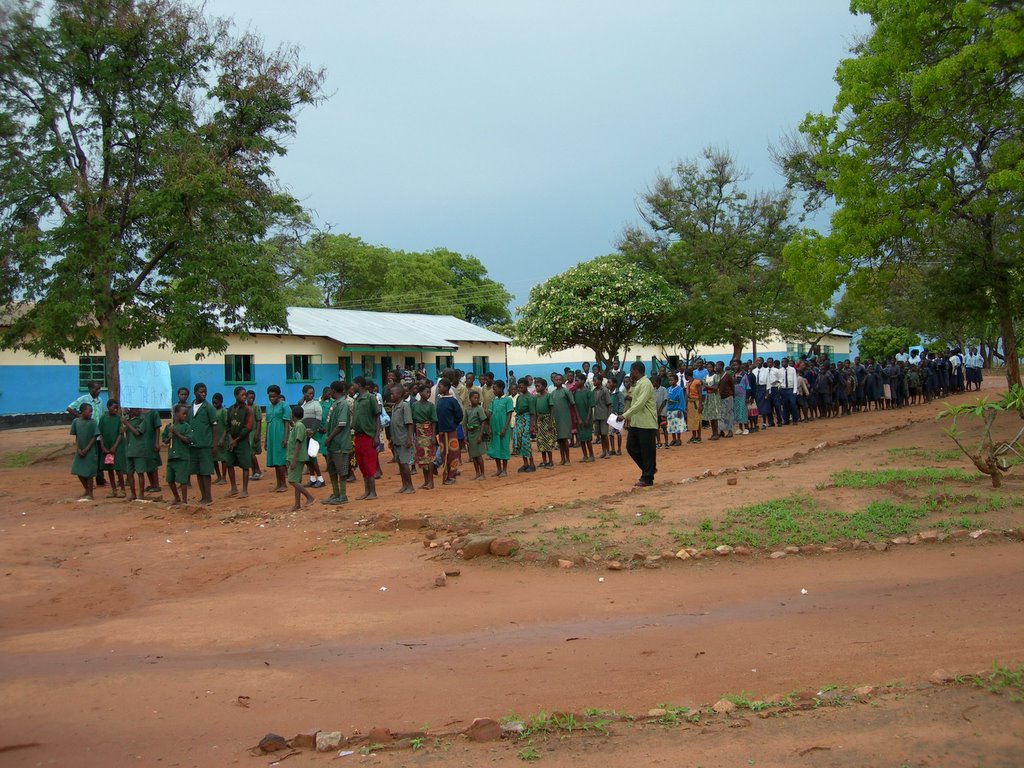
This is a photo taken at a World AIDS Day walk in my community. About 200 folks showed up and did drama and such.


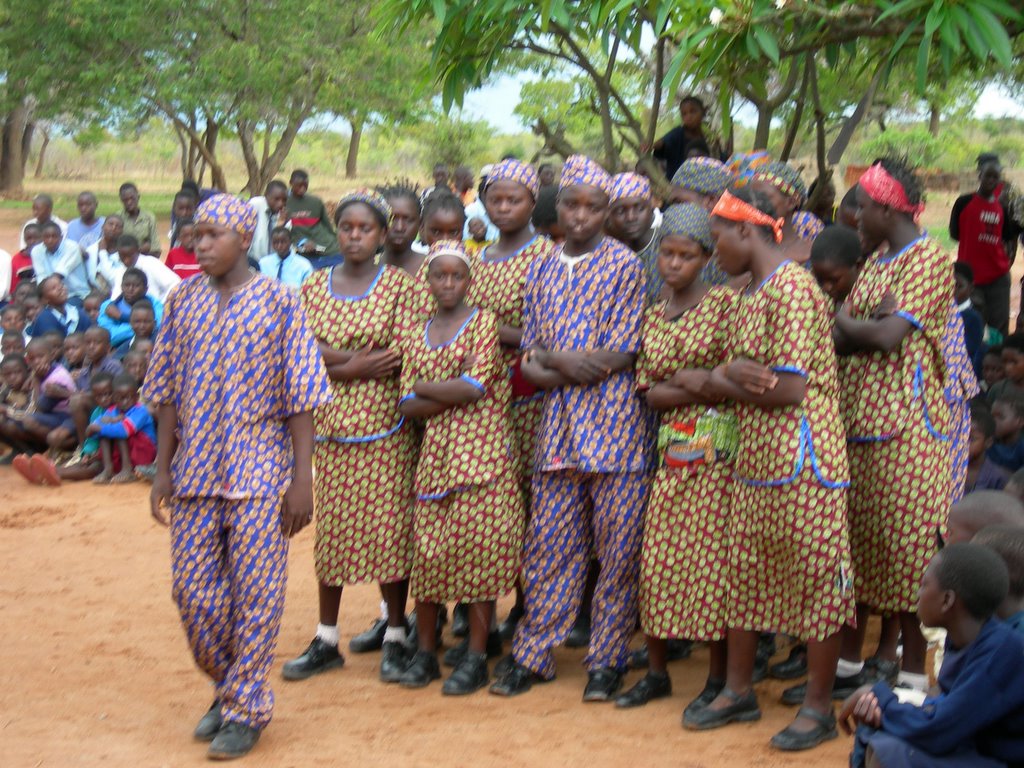
This is s photo of a singing group at World AIDS Day.


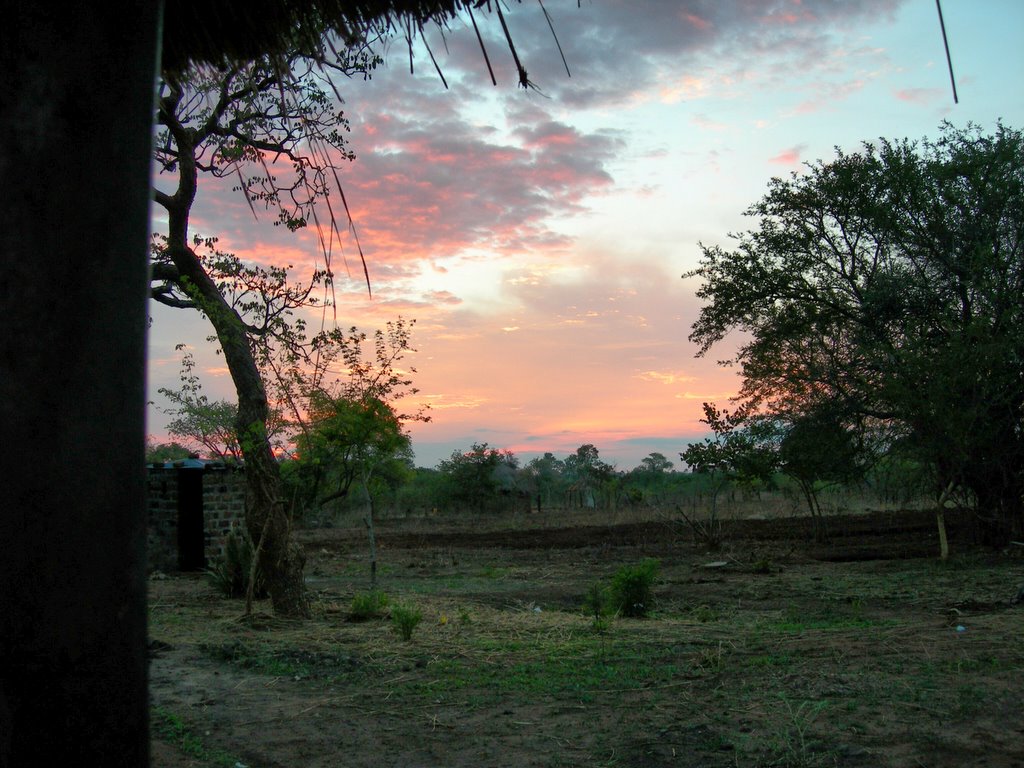
This photo was taken from my doorstep in late November, 2006. Pretty dry huh?


This photo was taken from the same place december 30, 2005. Demonstrates how green things can get.

Saturday, December 03, 2005

december post

I have been here another month or so.

The rains have come. Big, fast-moving, deep blue thunderheads, carried on strong winds that drop anything from light showers to downpours. Dark skies with lighting and thunder that shift unexpectedly as the days go.

My house is thatched with grass. I have put black polyethylene plastic underneath the grass to keep myself reasonably dry. Locals say the grass doesn’t leak, while expatriates say it does. Given my tolerance for being wet is more likely on the expatriate side, I have put plastic. I may add that the rain repellent of grass is not helped by local cows considering my roof a delicacy.

Work is going well. I am beginning to understand the structure, the time table, and the general work that my counterparts have (those that I am working in HIV with, all Zambian as of now). It is not frustrating, rather an interesting learning experience. Isn’t it all though?

I might add that my learning curve would be a lot steeper if I spoke Tonga fluently or was a local. Oh well, one I am working on and the other I cannot help.

Speaking of which, I have found a local teacher with whom I will continue formal Tonga lessons. This will be in conjunction with the popular local method of speaking to me in very fast Tonga and expecting my understanding. I appreciate the contributions of both, but I am looking forward to the learning on two fronts.

I will be in my community for the holidays and am looking forward to both seeing how they are celebrated here and spending some quality time in my community.

Physically and mentally, I feel fit. I don’t find myself ill or battling shock or depression. I am eating well and have found good friends in my community that sustain me. I am also keeping occupied learning about HIV, nutrition, agriculture, and the culture in my community.

I have felt my patience deepening and am working on my compassion as I am judged constantly. These are challenges I have readily accepted as I endeavor to continue strengthening these qualities that I value.

I hope these words find everyone healthy and surrounded by joy.

love. niko.

Friday, October 14, 2005

second month text

I am still well here in Zambia, enjoying life and learning lots.

Relish (beans, soy pieces, cabbage, collards/rape, meat, fish), or that which is eaten with nshima (stiff maize porridge), is difficult to find these days. Many cite a lac k of money, water, or a garden from which they may draw food. A consistent request from many living here is that they want a borehole/pump as water is difficult to find.

I survive by going to town for staples (peanut butter, ground maize, sugar, oil) and buying produce near my village. These are options for me since I have a source of income and no family which enables me to stretch out my food in a way others can’t. Since I have no family it takes me about a month to go through what others may finish in a few days.

The HIV/AIDS work is going well. I am helping my community form a community AIDS task force (CATF), which should allow more communication and learning among the various clubs and support groups here in Keemba zone. I am also assisting as an HIV/AIDS teacher outside my zone with colleagues in the field.

I am also finding that I spend a considerable amount of time in the nearby town (Monze) and the capital (Lusaka), as I update reports, find information, and network with those doing HIV work here in Zambia.. I think my travel may be a result of working in HIV and my assigned role as a liaison between my community, the Ministry of Health, and others doing HIV work here.

The travel may also be a reflection of the community in which I live, as there are daily multiple vehicles that go to Monze in the morning and return in the afternoon for those with business there. I may add that this is an option for those with money, but is an obstacle for many that live in the village, as the cost of transport may buy a weeks worth of maize for a family.

I may add that the relatively easy transport does not appear to be common among other Peace Corps sites nor does my relative proximity to the capital city (~6 hours from my hut doorstep to Lusaka). A colleague of mine said that the transport may reflect the past wealth of the area in terms of livestock and agriculture which has decreased due to both the current drought and HIV. Though this means my Peace Corps experience may be a bit “citified”, the easy transport may be assumed a comparatively higher HIV infection rate than other rural areas, making my presence worthwhile.

Other than that, I am preparing a small garden, building small things around the house, and preparing to plant for the rainy season (November-April). When I first arrived, the headman offered to give me land to farm, which I am taking him up on. I, with some agricultural experts, will hopefully plant a demonstration farm to show methods that may decrease water and fertilizer dependency.

We will see. It should be a learning experience all around.

I hope everyone is doing well.

love, niko.

more pictures


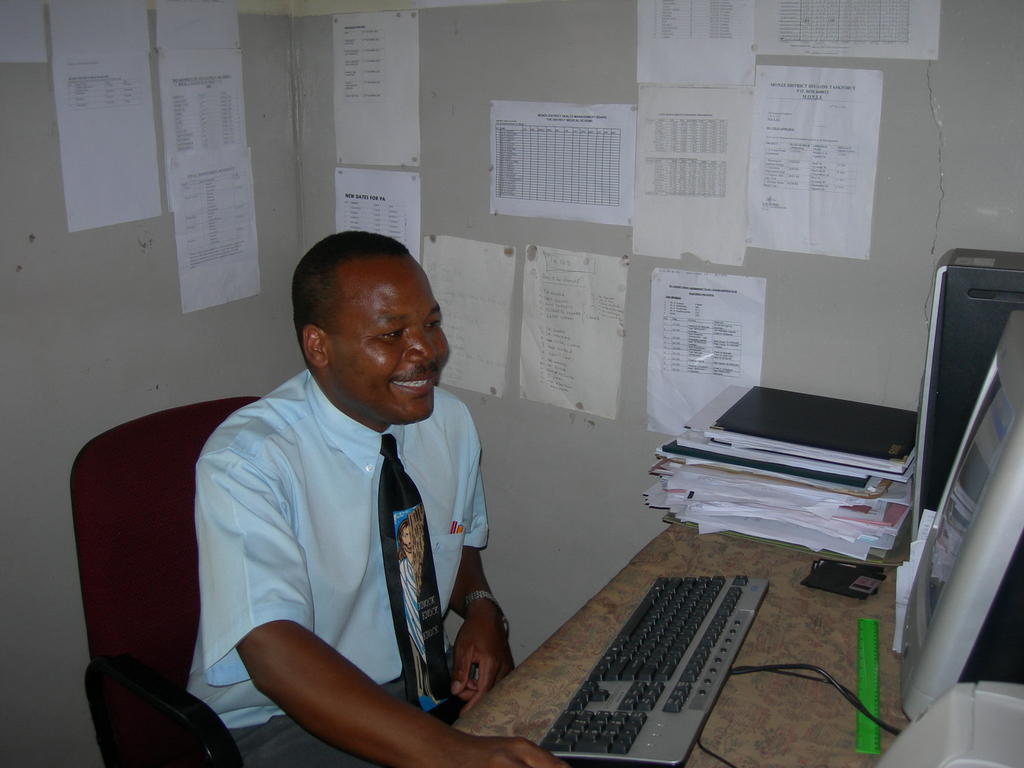
This is ba-phiri. he is my ministry of health counterpart and rocks! He is always smiling and loves to joke. we have a lot of fun together.


This is my good friend Ba-Clay. He is close to my age and we chat often.


This is my house. self-explanatory I think.


This is ba-lumba. She is finishing certification to be a teacher of history and Tonga language. She also stays at the compound when she is not in school.


this is hamagaye. he is the same age as Ba- Bonanza, but he is one year ahead at school. They are both helping me learn Chi-Tonga.


this is ba-bonanza. he lives in the same compound and is a son of the headman. He is 19 years old and we hang out when he is not in school. He is currently in 11th year.


This is mrs. Chilumbii and Joy. Mrs. chilumbii is one wife of the headman and joy I believe is her daughter. Mrs. Chilumbii is the headmistress of the basic school and I believe I have explained what she does previously.